Sourdough bread and blood sugar: what the research shows
How sourdough bread affects blood sugar, what scientists found in people with diabetes and prediabetes, and why whole grain sourdough stands out.
5 min read
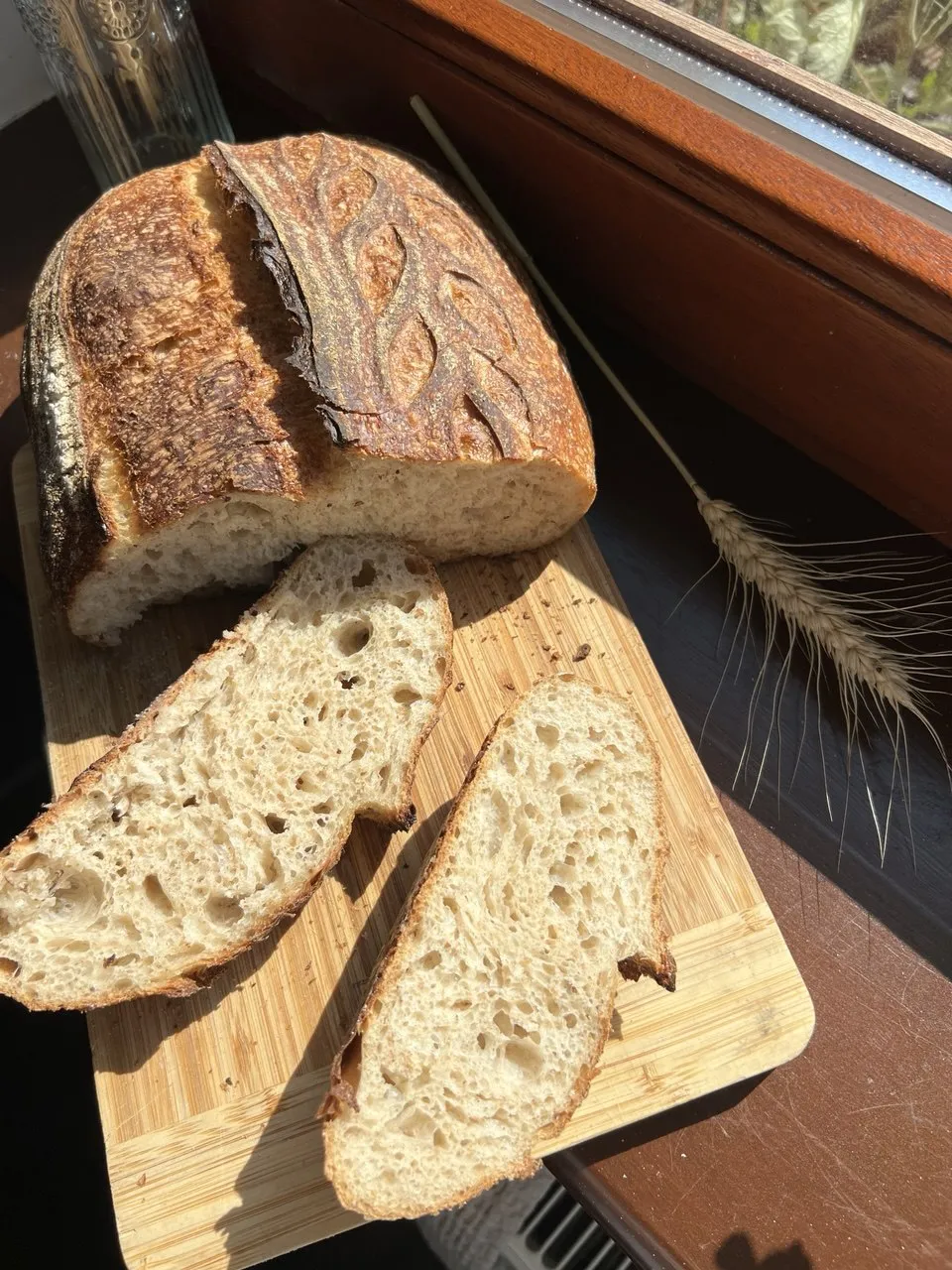
Bread and blood sugar. For many people, it's a sore subject. If you or someone close to you has diabetes or prediabetes, bread often seems like the first thing to cut. And every time you slice a piece, a doubt creeps in: maybe I shouldn't?
So brew yourself a cup of tea, and let's look at what scientists have found about sourdough bread in particular. The news here is pleasant, though there are no miracles.
What happens to blood sugar after a slice of bread
Bread is mostly starch. In the gut, starch breaks down into glucose, which goes into the blood. The faster that happens, the higher blood sugar rises after a meal. To bring it back down, the body releases insulin.
Picture two slices of the same size. One is from a soft white loaf, the other from a dense whole grain sourdough bread. On the plate they look alike, but inside the body they behave differently. One releases its sugar into the blood a little faster, the other a little more slowly. Same bread, you might think, but that small difference matters too.
For people with diabetes, these rises matter a lot. So scientists have long wondered: can you bake a bread that makes blood sugar rise more slowly and less? Sourdough turned out to be one of the most interesting candidates.
What a big summary of studies says
Let's start with the widest view. Scientists pooled 18 studies in which people ate either sourdough bread or regular bread. One hour after eating, blood sugar after sourdough bread was on average a little lower. And two hours after, too1. Sourdough bread made with whole wheat flour gave the best result1.
The difference is small, so this isn't a magic slice. The authors themselves honestly say that the certainty of this evidence is still low1. But it all points one way: in favor of sourdough. And I really love that slow homemade bread comes out ahead here.
Studies in people with diabetes and prediabetes
Of course, the most interesting studies for us are the ones where the bread was eaten by people whose bodies struggle with blood sugar.
| Who took part | How many people | What was found |
|---|---|---|
| Prediabetes (impaired glucose tolerance) | 16 | Half an hour after sourdough bread, blood sugar and insulin were lower than after yeast bread2 |
| Type 2 diabetes | 12 | After sourdough bread, peak blood sugar and insulin were lower, and the total rise in blood sugar over 4 hours was smaller3 |
| Gestational diabetes | 43 women, plus 38 healthy pregnant women | One hour after whole grain sourdough bread, blood sugar and insulin were lower than after white bread4 |
The newest of these studies, in people with type 2 diabetes, used sensors that measured blood sugar continuously for several hours after people ate the bread on an empty stomach. Yeast bread gave a higher peak than sourdough bread that had fermented for 8 hours3.
What the chart shows
The clearest picture came from the study with pregnant women. They were given the same breakfast, once with white bread and, another week, with whole grain sourdough bread.
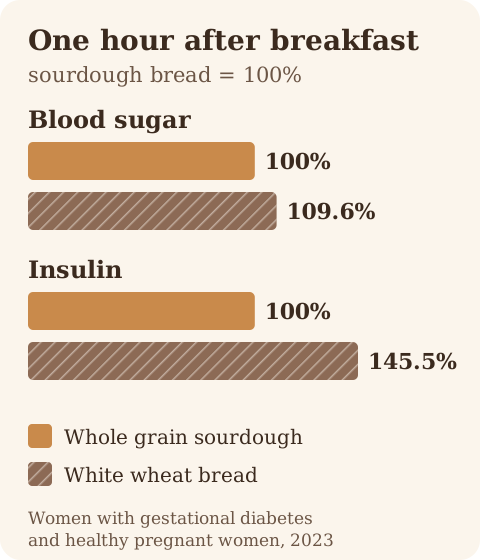
One hour after the white bread, blood sugar was 9.6% higher and the body released 45.5% more insulin4. And this was true both for women with gestational diabetes and for healthy pregnant women4.
In other words, sourdough and whole grain together helped smooth out the first, steepest rise in blood sugar after a meal.
Why sourdough might have this effect
Scientists have a few explanations. During a long fermentation, the bacteria in a starter produce lactic acid. Researchers think that this acid, together with fewer simple carbohydrates in the dough, may be behind the smaller rise in blood sugar2.
The flour matters too. A large study that measured the glycemic index of 23 kinds of bread found that whole grain flour and sourdough lower a bread's glycemic index. And sourdough together with seeds reduced blood sugar about an hour after a meal. That study was done in healthy people5.
So it all comes back to slow bread, the kind that takes its time in the bowl and in the oven. Time, tang and whole grain. The very things we already love about sourdough.
Why results can differ
I'll be honest: the effect doesn't come out the same in every study. Scientists who reviewed 25 clinical trials explain that sourdoughs are very different from one another. The bacteria in the starter, the fermentation time, and the type of grain and flour all matter6. But where specific starter bacteria and fermentation conditions were used, the rise in blood sugar after bread improved noticeably6.
That idea feels very close to me. Sourdough bread isn't one product but a whole family. A loaf that fermented all night on a lively starter and a store-bought "sourdough" with a one-hour rise can be completely different breads.
How to choose a sourdough bread that's the real thing
Here's what to look for if blood sugar is a topic close to you:
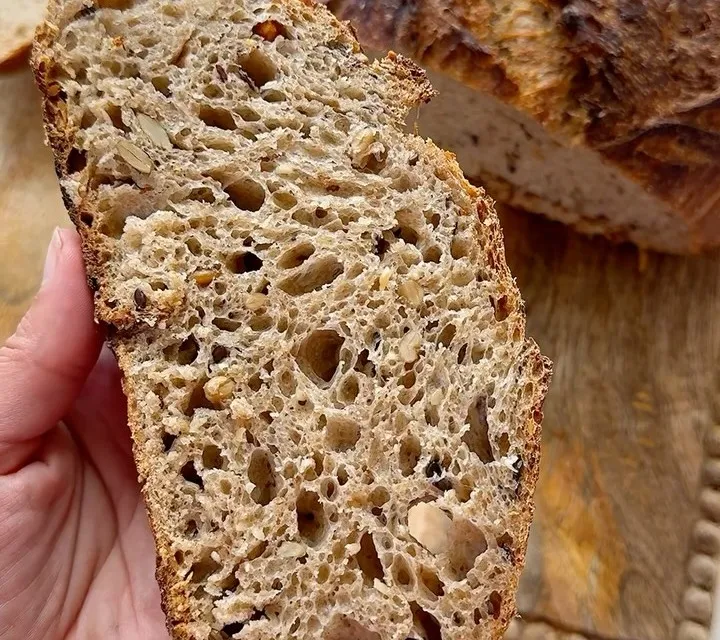
- Whole grain. In studies, sourdough bread made with whole grain flour did best1.
- A long fermentation. Real sourdough bread ferments for hours. In the type 2 diabetes study, the sourdough bread fermented for 8 hours and the yeast bread for 43.
- Seeds. Bread with seeds also showed a lower rise in blood sugar5.
- Ingredients. Look for a sourdough starter on the label, not just yeast. And if you bake at home, it's all in your hands.
And if you'd like to bake this kind of bread yourself, my learning program has everything you need to grow a starter from scratch. My recipe books have plenty of breads with whole grain flour and seeds.
Bread doesn't have to be the enemy. A lot depends on what kind of bread it is: slow, whole grain, with a living tang.
Sources
-
Rolim M. E., Fortes M. I., Von Frankenberg A., Duarte C. K. (2024). Consumption of sourdough bread and changes in the glycemic control and satiety: A systematic review. Critical Reviews in Food Science and Nutrition, 64(3), 801–816. doi.org/10.1080/10408398.2022.2108756 ↩︎ ↩︎ ↩︎ ↩︎
-
Maioli M. et al. (2008). Sourdough-leavened bread improves postprandial glucose and insulin plasma levels in subjects with impaired glucose tolerance. Acta Diabetologica, 45(2), 91–96. doi.org/10.1007/s00592-008-0029-8 ↩︎ ↩︎
-
Taras M., Cherchi S., Campesi I., Margarita V., Carboni G., Rappelli P., Tonolo G. (2024). Utility of flash glucose monitoring to determine glucose variation induced by different doughs in persons with type 2 diabetes. Diabetology, 5(1), 129–140. doi.org/10.3390/diabetology5010010 ↩︎ ↩︎ ↩︎
-
Ozer Y. E., Cengiz H., Demirci T., Kizilgul M., Varim C., Tamer A. (2023). Glycemic responses to whole grain sourdough bread versus refined white bread in patients with gestational diabetes. Wiener klinische Wochenschrift, 135(13–14), 349–357. doi.org/10.1007/s00508-023-02200-9 ↩︎ ↩︎ ↩︎
-
Lange E., Palkowska-Gozdzik E., Keszycka P. K. (2024). The influence of various types of functional bread on postprandial glycemia in healthy adults. Applied Sciences, 14(24), 11900. doi.org/10.3390/app142411900 ↩︎ ↩︎
-
Ribet L., Dessalles R., Lesens C., Brusselaers N., Durand-Dubief M. (2023). Nutritional benefits of sourdoughs: A systematic review. Advances in Nutrition, 14(1), 22–29. doi.org/10.1016/j.advnut.2022.10.003 ↩︎ ↩︎