Pumpkin and spice in sourdough bread: how autumn behaves in the dough
Why pumpkin dough suddenly turns sticky, how much pumpkin to add to bread, and why cinnamon is better swirled in than mixed in.
5 min read
November smells like pumpkin and cinnamon. You want your kitchen to smell that way too, and your bread along with it. But a first pumpkin loaf often comes as a surprise: the dough sticks to your hands, rises lazily, and the slice turns out denser than you hoped. Don't be quick to blame your starter. Pumpkin and spices simply have a character of their own, and it's easy to make friends with it.
So pour yourself something warm, and let's look at what happens in the dough when autumn gets into it.
Where pumpkin comes from
Let's start with a little history. Pumpkin feels like a homegrown autumn classic. In fact, it comes from the Americas. Archaeologists found seeds and bits of rind in a cave in Mexico and worked out that people were already growing this kind of squash about 10,000 years ago1. It's one of the first plants people tamed there, long before corn.
I love the thought that a pumpkin loaf brings together two of humanity's oldest friends. Grain and pumpkin. Each traveled a long way to end up together in your oven.
Why pumpkin dough is so sticky
Pumpkin only looks solid. Raw pumpkin is more than 90 percent water2. So a cup of puree is almost a cup of water, just orange and very tasty.
That's where the sticky dough comes from. If you take your usual recipe and simply add pumpkin, the dough ends up with a lot more water than planned. It spreads, doesn't hold its shape, and it seems like your starter isn't pulling its weight. But it's not to blame at all.
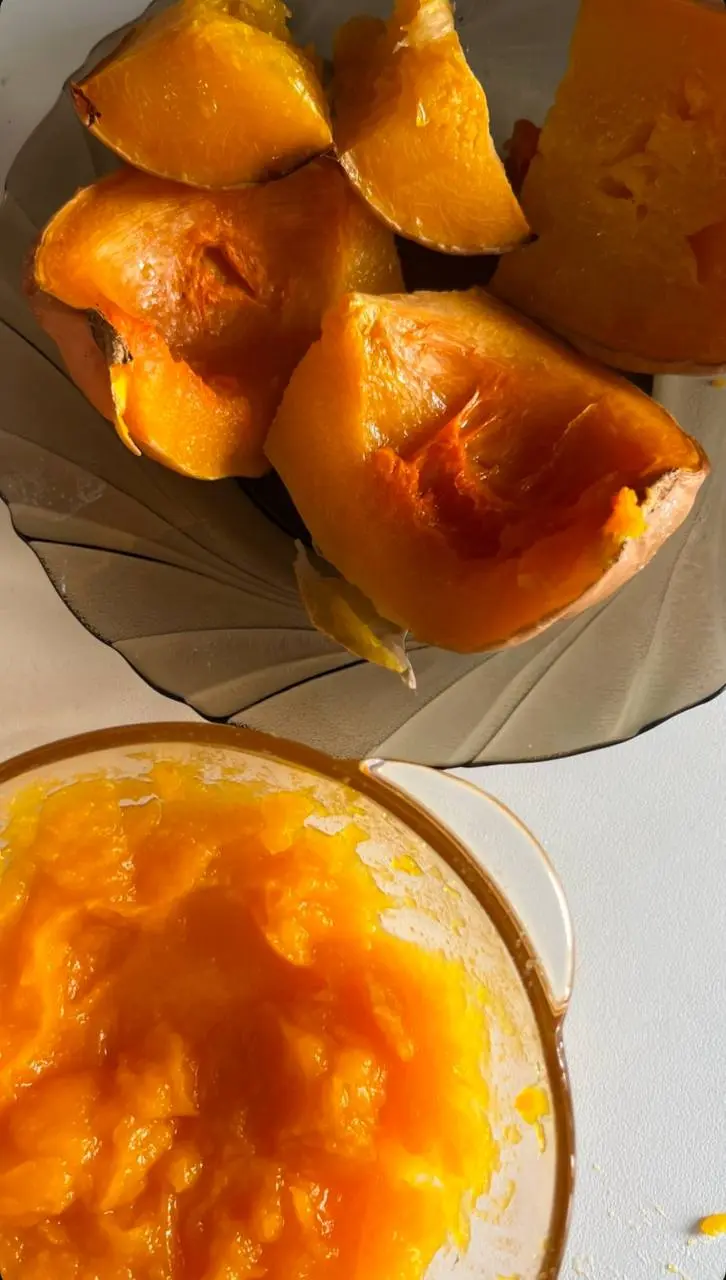
What to do? Count the pumpkin as part of the water. Think of the puree as very thick water with personality. Since you've added puree, pour in less water from the jug, a little at a time, until the dough feels the way you're used to. Puree from roasted pumpkin is usually thicker than from boiled, because some of the moisture cooks off in the oven.
One more small thing. Pumpkins vary a lot: one is juicy, another is dry and sweet. So even with the same recipe, the dough can behave a little differently each time. Trust your hands more than the numbers.
How much pumpkin to add
This is where scientists can help. They baked wheat bread with more and more pumpkin pulp and watched what happened. As long as there was only a little pumpkin, the bread came out nicely, and people liked it as much as plain bread. But as the pumpkin went up, the loaves got lower and the crumb got firmer. The aroma suffered too3.
Another team came to a similar conclusion with pumpkin flour: the best bread was the one where pumpkin replaced only a small share of the wheat flour4. The more pumpkin, the smaller the loaf and the denser the slice.
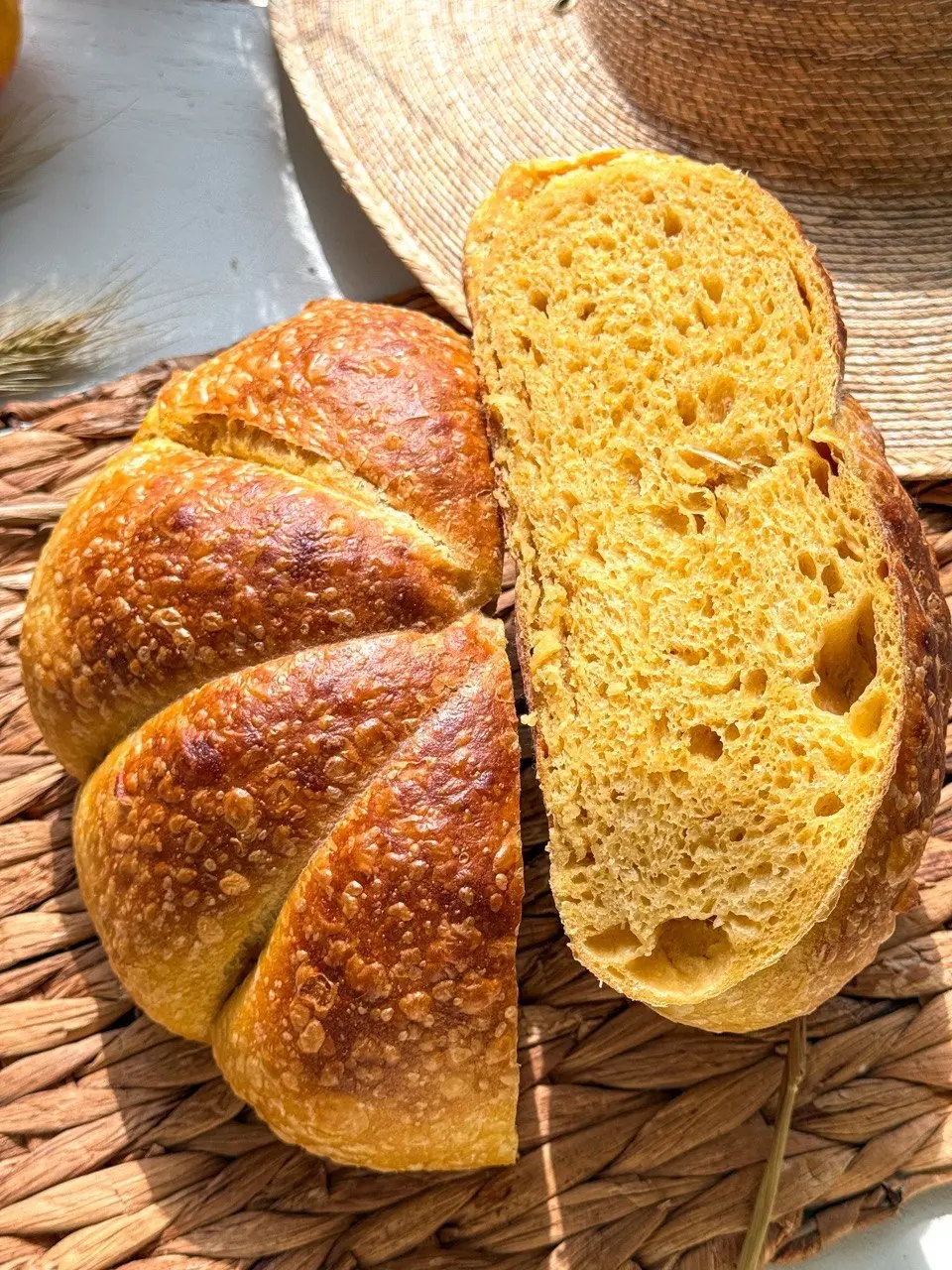
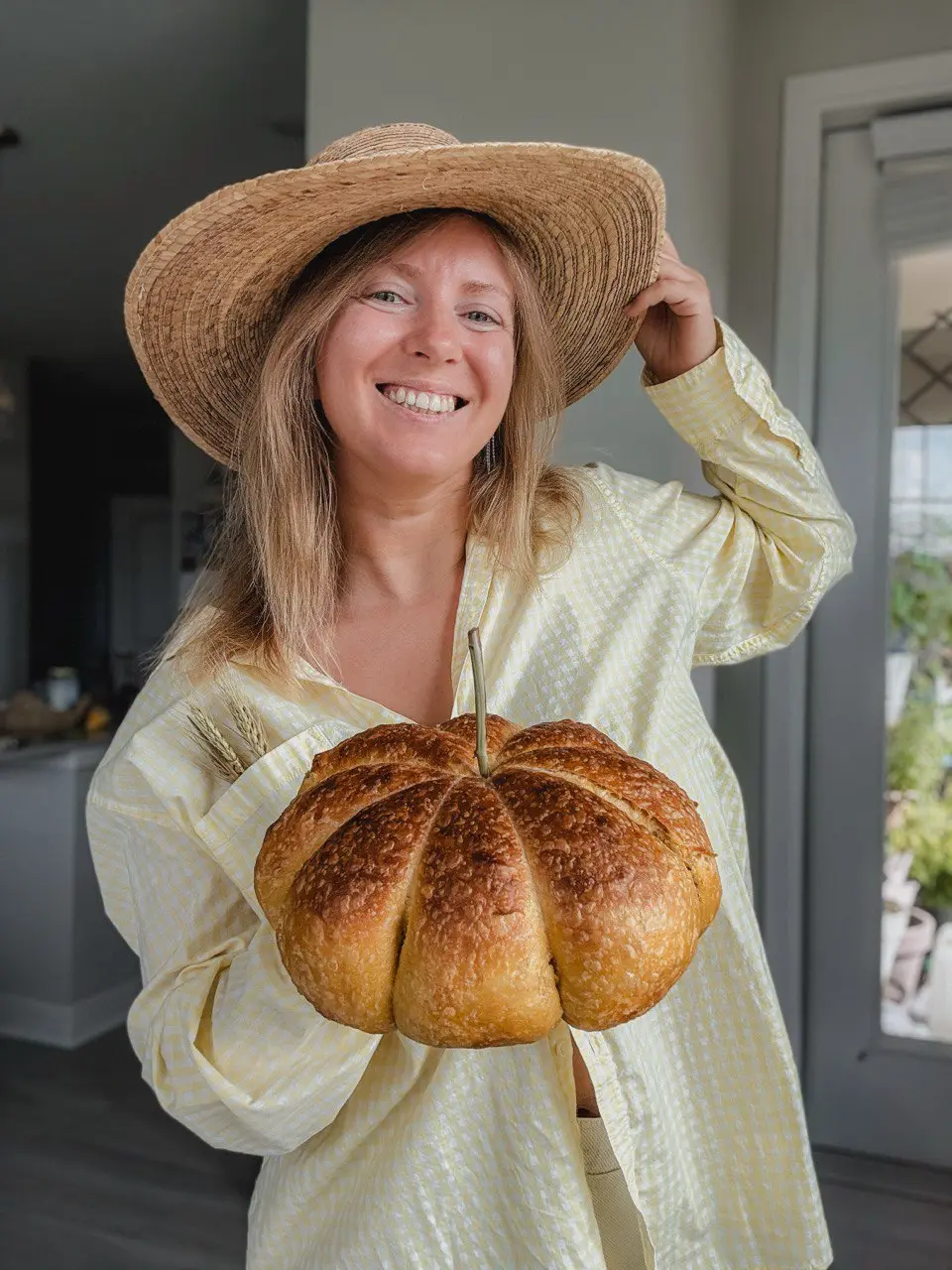
So pumpkin in bread is like salt in soup. A little makes everything better, and too much spoils it. The good news is that even a small amount gives a lovely golden color. The slice looks as if autumn sunshine is lighting it up. You see it best in the morning, when you cut a still-warm loaf for breakfast.
How long to let the dough rise
In that same pumpkin flour study, the bread rose for either one hour or two. The best bread had a small share of pumpkin and the longer, two-hour rise4.
That's good news for us, because sourdough is never in a hurry anyway. Pumpkin dough is heavier than plain dough, so give it a bit more time. Go by the dough, not the clock: it should become noticeably bigger, lighter and bubbly.
If your kitchen is cool, and autumn tends to make it so, the rise can take longer. That's fine. Put the bowl in the warmest spot you have and be patient.
Cinnamon and yeast
Now for the spices. Cinnamon, nutmeg, ginger, cloves. Autumn bread isn't the same without them. But cinnamon has one small trick up its sleeve: it slows yeast down. The bakers at King Arthur Baking warn that cinnamon inhibits yeast when you add a lot of it straight into the dough5.
A starter has yeast in it too, so I wouldn't take the risk. A few ways to keep both the aroma and a good rise:
- Swirl it. Roll out the dough, sprinkle it with cinnamon sugar and roll it up. The spice smells wonderful, and the dough barely notices it.
- A pinch, not a handful. If you really want cinnamon in the dough itself, start with a small pinch.
- Sprinkle it on top. Cinnamon sugar on the crust fills the whole kitchen with its scent.
It's also best not to overdo nutmeg, ginger and cloves, but for a different reason: their flavor is very bold. A pinch lifts the bread, and a spoonful turns it into gingerbread. Pumpkin is gentle, and it would like to be tasted too.
How to bake pumpkin sourdough at home
- Roast the pumpkin rather than boiling it. The puree comes out thicker and sweeter.
- Let the puree cool, so it doesn't give your starter a hot shock.
- Count the pumpkin as water. Add water gradually and stop when the dough feels familiar.
- Start with a small amount of pumpkin. Next time you can add more if you like it.
- Swirl the spices in or sprinkle them on top. Put only a tiny bit into the dough.
- Be patient with the rise. Pumpkin dough is heavier and needs a little more time.
And finally, don't be afraid to experiment. Bread you want to share starts with curiosity, not perfection. Even if your first pumpkin loaf comes out a little flat, it will still smell like autumn, and with butter and tea it will be gone by evening. And the second one will be better, because by then you'll know your pumpkin and your dough.
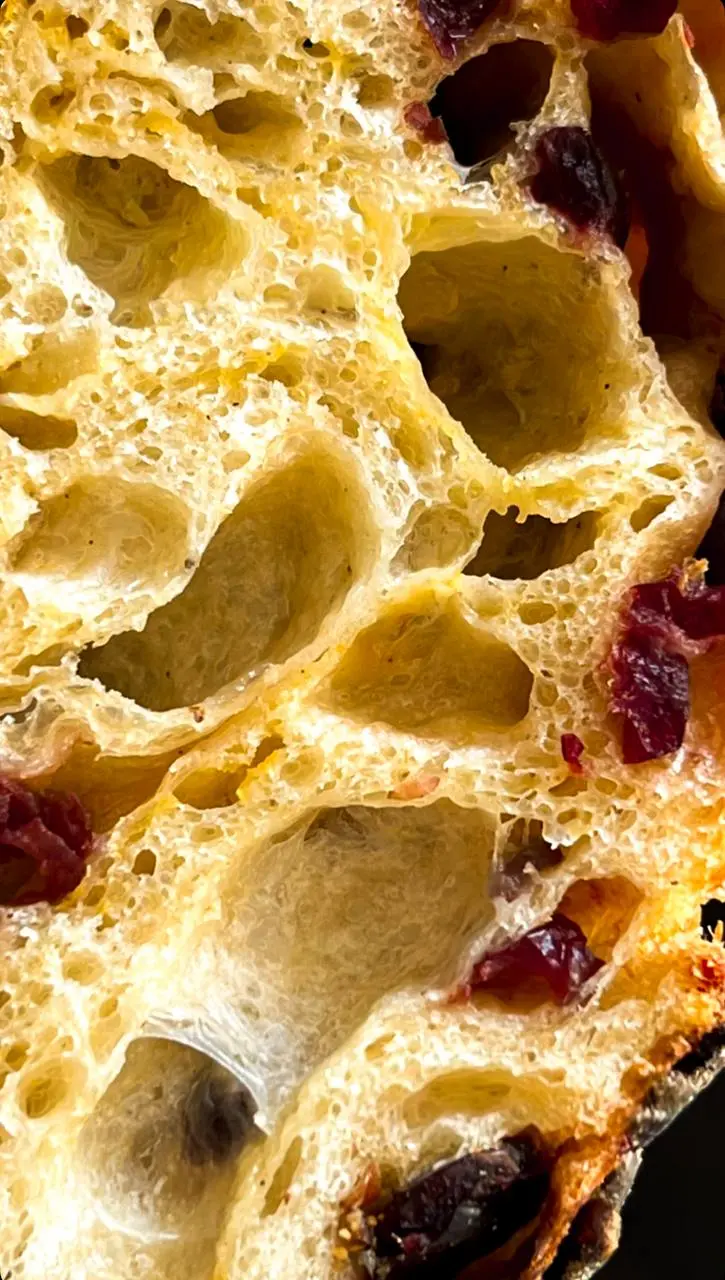
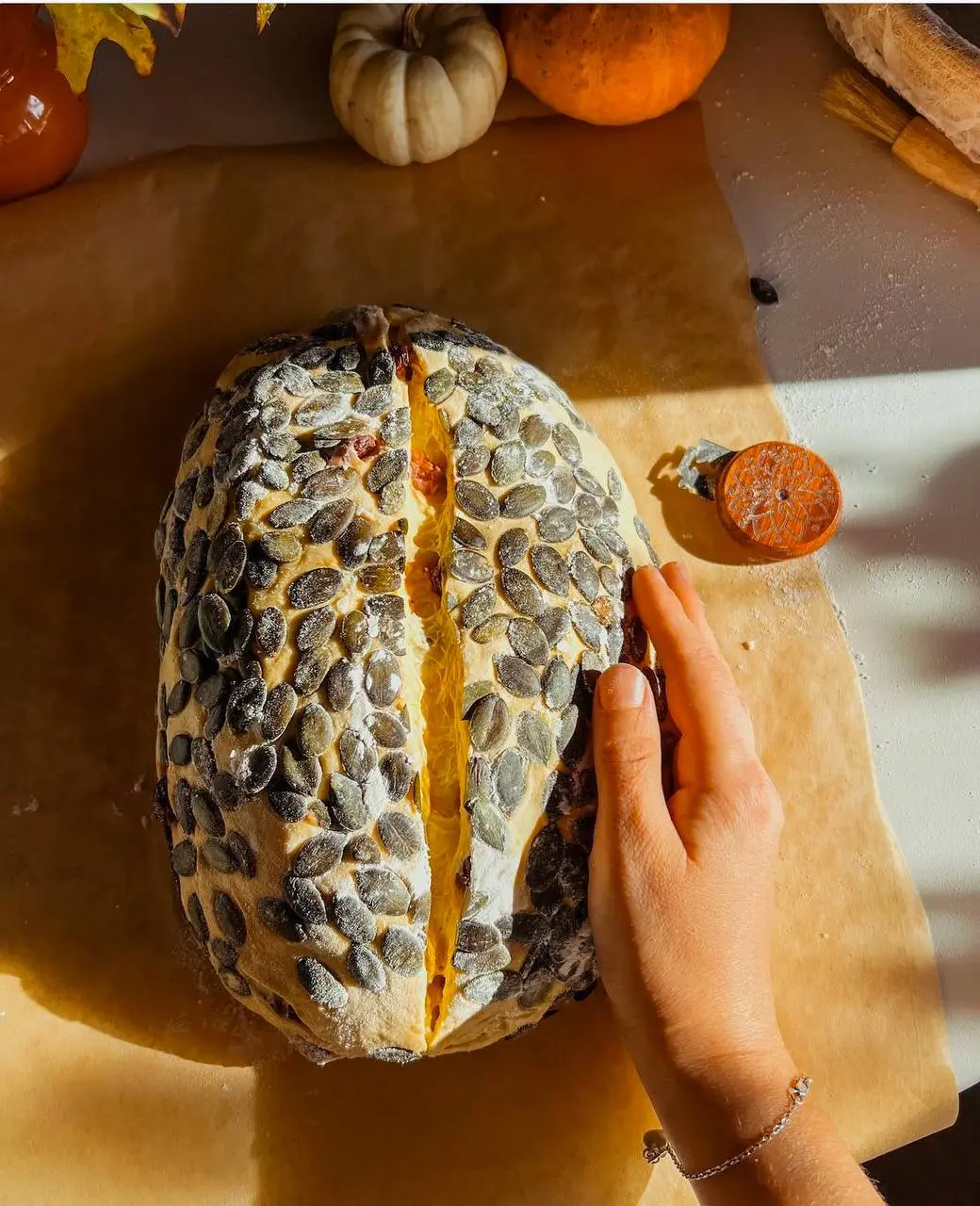
In my autumn collection you'll find a bread with pumpkin puree, cranberries, orange, cinnamon and pumpkin seeds. And lots more autumn seasonal baking. And if you don't have a starter yet, my learning program has everything you need to grow one from scratch.
Sources
-
Smith B. D. (1997). The initial domestication of Cucurbita pepo in the Americas 10,000 years ago. Science, 276(5314), 932–934. doi.org/10.1126/science.276.5314.932. A short account of the find: Harrington S. P. M. (1997). Earliest agriculture in the New World. Archaeology, 50(4). archive.archaeology.org ↩︎
-
U.S. Department of Agriculture, FoodData Central. Pumpkin, raw (FDC ID 168448): 91.6 g water per 100 g. fdc.nal.usda.gov ↩︎
-
Różyło R. et al. (2014). Wheat bread with pumpkin (Cucurbita maxima L.) pulp as a functional food product. Food Technology and Biotechnology, 52(4), 430–438. doi.org/10.17113/ftb.52.04.14.3587 ↩︎
-
Alija D. et al. (2025). Prolonged proofing modulates the acrylamide content, nutritional and functional characteristics of pumpkin (Cucurbita maxima Plomo) and soft wheat composite bread. Foods, 14(3), 437. doi.org/10.3390/foods14030437 ↩︎ ↩︎
-
King Arthur Baking. Does salt kill yeast? (a King Arthur baker's reply in the comments, December 22, 2023). kingarthurbaking.com ↩︎