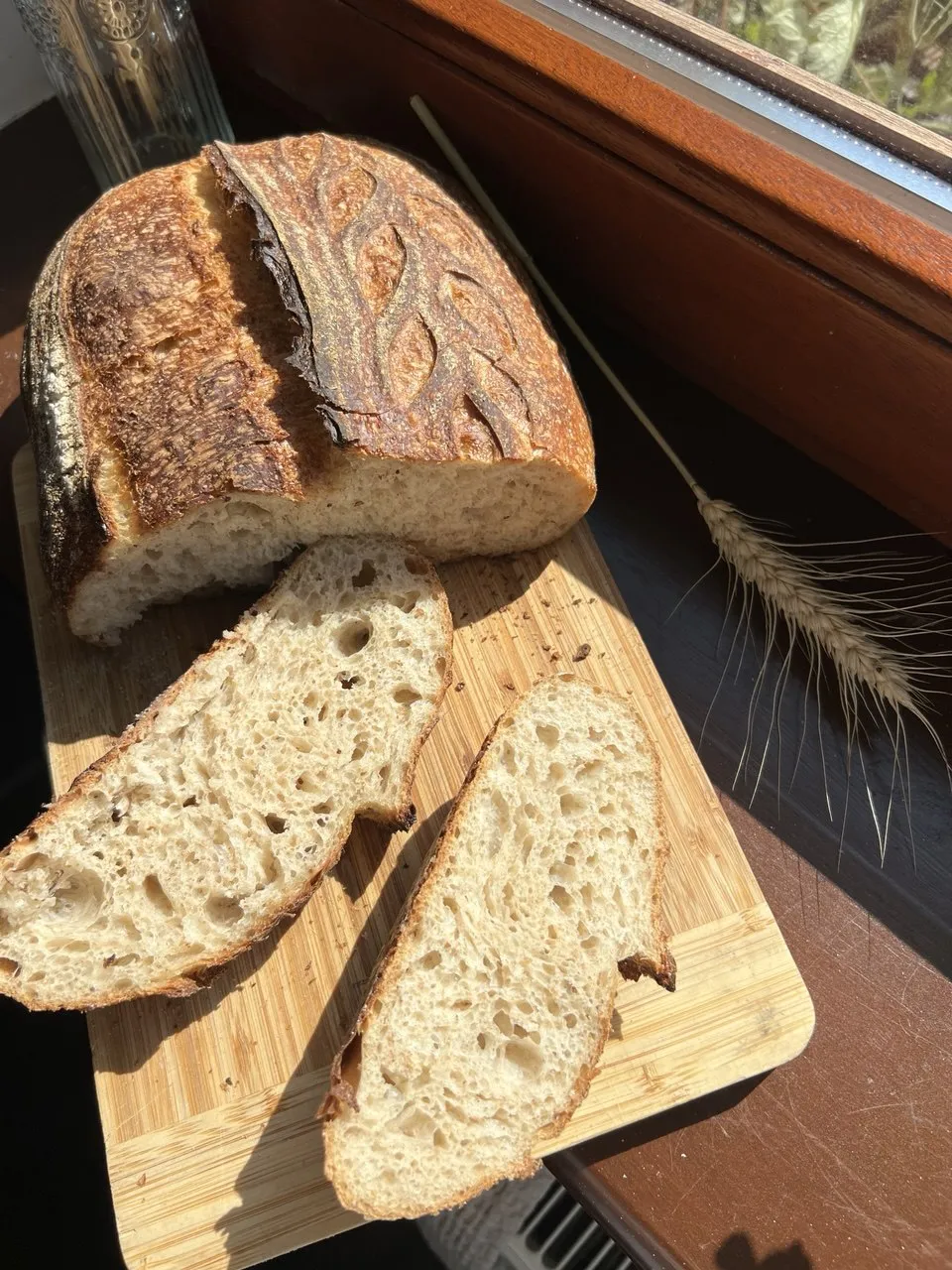
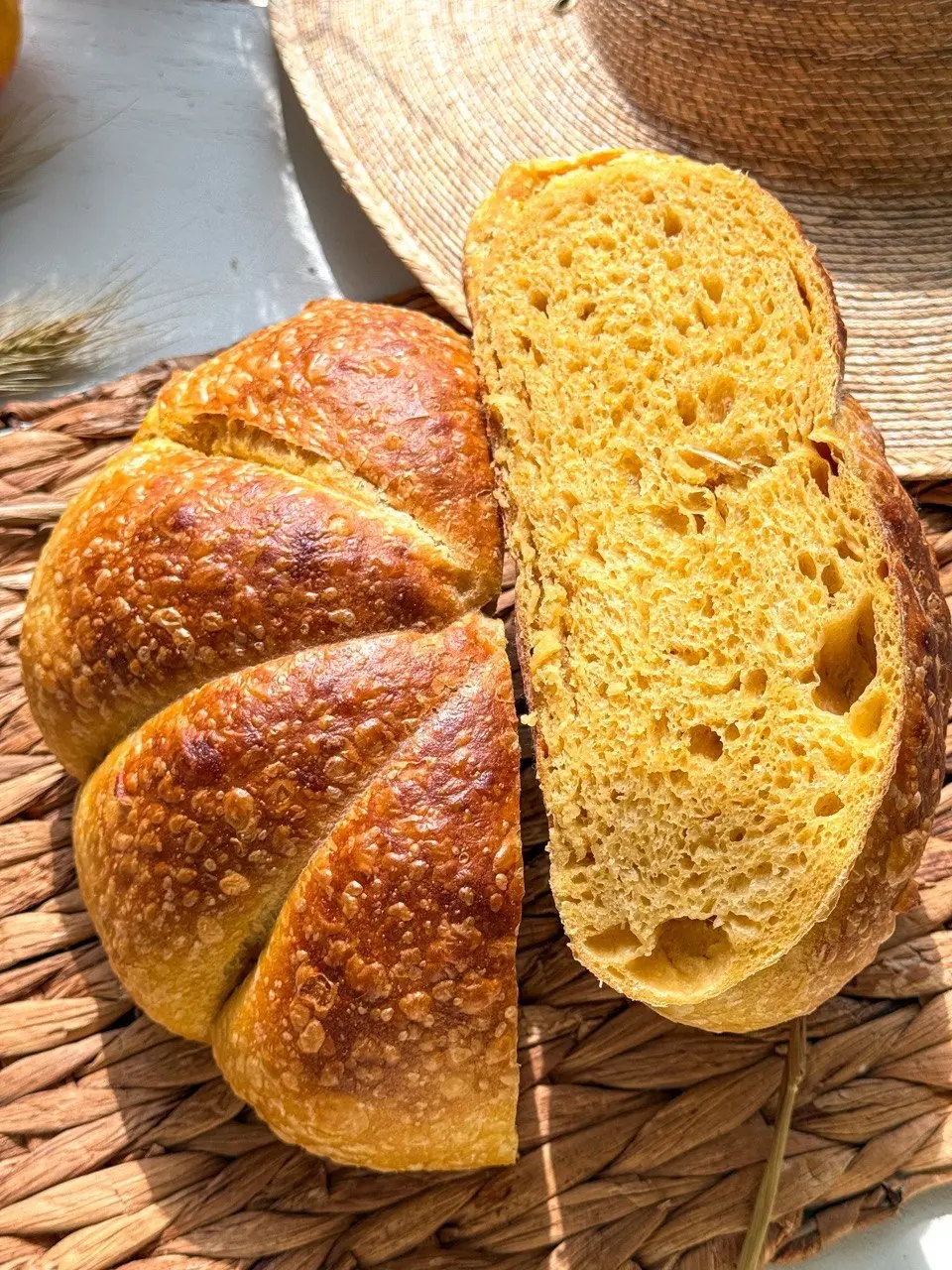
Who really benefits from sourdough bread (and who should be careful)
No science fog: what a starter does to bread, who it's good for, and who should skip even the best loaf.
5 min read
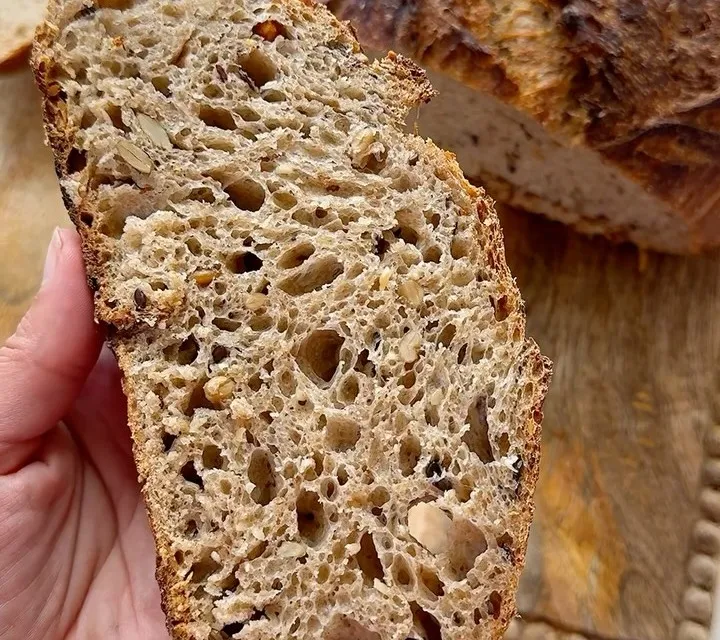
People often say sourdough bread is healthier than ordinary bread. Sounds lovely, but what's actually behind it? And does it suit everyone the same way? Let's figure it out together, without the jargon. So make yourself a cup of tea, cut a slice of something tasty, and let's talk.
Let me be honest right away: sourdough bread isn't a magic pill. But something truly lovely happens to it, and each of us gets something a little different out of it.
Slow bread
To me, a starter is like a tiny household in a jar. Wild yeasts and lactic acid bacteria live there together. They eat flour and work without days off. I feed them, and they thank me with bubbles and good bread. Fair deal!
Yeasted bread is often ready in a couple of hours. Sourdough takes its time: the dough ferments for half a day, sometimes a whole day. While we sleep or go about our day, the microbes do a lot of work on the flour. The bread comes out tastier, more fragrant and easier on the body.
There's one fact I love. Scientists collected 500 home starters from around the world and found that starters from different countries are remarkably alike1. Now I understand why my starter settled into each new home so easily when I baked in Germany, Poland, the US and now in Spain.
If you watch your blood sugar
I have two pieces of news here, and both are good.
The first: for many people, sourdough bread raises blood sugar more gently than ordinary yeasted bread2. It's as if the long fermentation slows the bread down a little on its way to becoming sugar.
The second: we're all different, and that's wonderful. When scientists had people eat white bread for one week and sourdough for another, there was no difference on average. But each person reacted in their own way: one bread suited some people better, and the other suited the rest3. So if you want to know how your own body gets along with bread, ask your doctor, not your neighbor.
If your tummy is sensitive
Wheat contains carbohydrates that can cause bloating and discomfort in sensitive people. The good news: while the dough slowly ferments, the starter's microbes eat some of them. Researchers at Monash University, who study food for sensitive guts, tested traditional spelt sourdough, and it passed their strict tests4.
But not every loaf labeled "sourdough" is the same. So here's my favorite tip.
If you love whole grain bread
Whole grain flour is like a treasure chest, full of iron, zinc and magnesium. There's a catch, though: it keeps some of that treasure under lock and key. And the key happens to belong to sourdough. Its gentle tang helps the flour let go of those minerals, so they're easier to get from sourdough bread than from yeasted bread5.
That's why I almost always bake whole grain bread with sourdough. Every slice gives you more.
For the whole family
Now for the nicest part, because with bread, flavor comes first. A long fermentation gives a deep aroma, a gentle tang and a crisp crust that quietly crackles as the loaf cools. Have you heard that sound? Bakers say the bread is singing.
Another lovely bonus: sourdough bread stays fresh longer and molds later. The tang and the substances the bacteria make work as natural protection6. So a loaf can easily last until the weekend. Unless it gets eaten first, of course.
Who should be careful
And a small note for fans of the word "probiotic": sourdough bread isn't one. The starter's microbes can't survive the heat of the oven8. All the magic happens before baking, while the dough quietly ferments.
If you've never baked with sourdough
I know a starter can feel a bit scary: it needs feeding, it needs watching, and what if something goes wrong? Here's a secret: it's much tougher than it looks. Forgot to feed it? No big deal. Pop the jar in the fridge, and your starter will happily wait a few days for you.
My own journey didn't start with perfect loaves either. It started with mistakes and doubts. So if your first bread doesn't turn out the way you dreamed, you're in great company. Every loaf like that teaches you something, and the next one will be better.
How to get the most out of sourdough bread
- Don't rush. Give your dough time, for example a night in the fridge. You rest, the starter works.
- Add whole grain or rye flour. Even a little, for flavor and goodness.
- Check the ingredients of store-bought bread.
- Listen to yourself. Your body knows best which bread it likes.
Sourdough bread isn't medicine and it isn't magic. It's simply bread made with a little patience. And patience, as we know, makes almost everything taste better.
If you'd like to grow your own starter and bake your first loaf, join my one-on-one course. And what should I write about next week? Message me on Instagram, I read everything!
Sources
-
Landis E. A. et al. (2021). The diversity and function of sourdough starter microbiomes. eLife, 10, e61644. doi.org/10.7554/eLife.61644 ↩︎
-
Maioli M. et al. (2008). Sourdough-leavened bread improves postprandial glucose and insulin plasma levels in subjects with impaired glucose tolerance. Acta Diabetologica, 45(2), 91–96. doi.org/10.1007/s00592-008-0029-8 ↩︎
-
Korem T. et al. (2017). Bread affects clinical parameters and induces gut microbiome-associated personal glycemic responses. Cell Metabolism, 25(6), 1243–1253. doi.org/10.1016/j.cmet.2017.05.002 ↩︎
-
Monash University FODMAP. Sourdough processing & FODMAPs. monashfodmap.com ↩︎
-
Lopez H. W. et al. (2001). Prolonged fermentation of whole wheat sourdough reduces phytate level and increases soluble magnesium. Journal of Agricultural and Food Chemistry, 49(5), 2657–2662. doi.org/10.1021/jf001255z ↩︎
-
Axel C., Zannini E., Arendt E. K. (2017). Mold spoilage of bread and its biopreservation: A review of current strategies for bread shelf life extension. Critical Reviews in Food Science and Nutrition, 57(16), 3528–3542. doi.org/10.1080/10408398.2016.1147417 ↩︎
-
Beyond Celiac. Is sourdough bread gluten-free? beyondceliac.org ↩︎
-
Marco M. L. et al. (2021). The International Scientific Association for Probiotics and Prebiotics (ISAPP) consensus statement on fermented foods. Nature Reviews Gastroenterology & Hepatology, 18(3), 196–208. doi.org/10.1038/s41575-020-00390-5 ↩︎